
Most people don’t think about their water heater until it stops producing hot water. But water heater repair in Simi Valley is often far more manageable — and less expensive — when problems are caught early. Understanding what normal aging looks like versus what signals an actual failure gives you the information you need to act at the right time.
How Long Do Water Heaters Actually Last?
A conventional tank water heater has a typical service life of 8 to 12 years. Tankless units last considerably longer — often 15 to 20 years with proper maintenance. Several factors affect that range: water quality, usage volume, annual maintenance habits, and the quality of the original installation. In southern California’s hard water environment, mineral buildup tends to accelerate wear and shorten that window if the unit isn’t flushed regularly.
Warning Signs to Watch For
The following symptoms indicate your unit is struggling and should be evaluated by a licensed technician:
- Inconsistent hot water — the temperature fluctuates between showers, or hot water runs out faster than it used to
- Discolored or rusty water coming from hot taps — this often points to corrosion inside the tank
- Rumbling or popping sounds during heating — typically caused by sediment buildup on the heating elements
- Visible moisture or pooling water around the base of the unit — even a small leak should be investigated
- A unit that’s more than 10 years old and showing any of the above symptoms — repair becomes a stopgap, not a solution
What a Repair Visit Covers
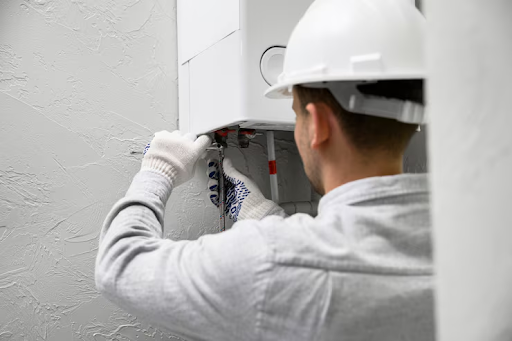
When a technician comes out for a water heater assessment, they’ll typically check the anode rod (a sacrificial component that prevents tank corrosion), the thermostat settings, the pressure relief valve, the condition of the tank interior, and any visible connections. Some of these components can be replaced affordably, extending the unit’s life by several years. Others signal that full replacement is the better path.
For water heater repair in Simi Valley, Sketchley Mason Plumbing handles both diagnostic visits and full-service repairs, helping homeowners understand their options before any work begins.
The Sediment Problem
Sediment accumulation is the most common reason tank water heaters fail before their expected service life. Minerals in the water supply — primarily calcium and magnesium — settle at the bottom of the tank over time. This creates a layer between the burner and the water, forcing the unit to work harder and run longer to reach temperature. The result is reduced efficiency, higher energy bills, and faster wear on the tank itself.
Annual flushing removes this buildup and is one of the most cost-effective maintenance tasks a homeowner can perform. A licensed plumber can do this during a routine visit, or walk you through the process if you prefer to handle it yourself.
Tank vs. Tankless: Is an Upgrade Worth Considering?
If your current tank is approaching or past its expected service life, it’s worth evaluating a tankless unit as part of the replacement decision. According to the U.S. Department of Energy, tankless water heaters can be 24 to 34 percent more energy-efficient than conventional tank models for homes that use 41 gallons or less of hot water daily. That efficiency gain translates to real savings on utility bills over the unit’s lifespan.
Source: U.S. Department of Energy — Water Heating
Whatever direction you take, the key is not waiting for a complete failure before making a decision. A proactive evaluation gives you time to choose the right solution rather than scrambling to replace a failed unit over a weekend.