
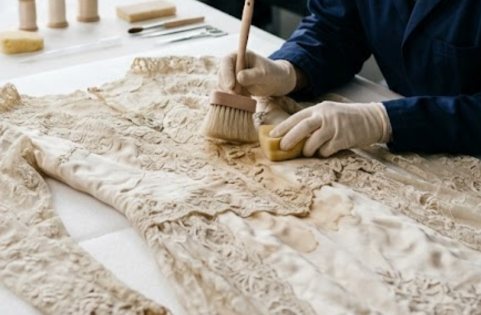
Vintage wedding gowns carry deep emotional and historical value, often passed down through generations. However, when these delicate garments are stored for long periods—especially in humid or poorly ventilated environments—they become vulnerable to serious damage such as mold, mildew, and water stains. These issues can seem irreversible at first glance, but modern vintage wedding gown restoration techniques offer several effective solutions. Understanding what can and cannot be repaired is essential for anyone hoping to preserve a vintage dress.
Understanding Mold, Mildew, and Water Damage in Wedding Dresses
Before exploring restoration possibilities, it is important to understand how these types of damage occur.
Mold and mildew are types of fungi that grow in damp, warm, and poorly ventilated conditions. They thrive on organic materials, including natural fabrics like silk, cotton, and lace—common materials in vintage gowns. Mildew often appears as powdery or patchy growth, while mold may present as darker, more deeply embedded spots.
Water damage, on the other hand, can occur due to flooding, leaks, accidental spills, or even high humidity. When water sits on fabric, it can leave behind:
- Yellow or brown staining
- Water rings or tide marks
- Fabric weakening or stiffness
- Discoloration from dye migration
In many cases, water damage also creates the perfect environment for mold growth if the dress is not dried properly.
Can Restoration Remove Mold from Vintage Wedding Gowns?
The good news is that mold damage can often be treated in vintage wedding gowns, especially when addressed early. Professional restoration specialists use controlled cleaning environments and specialized solutions designed to kill fungal growth without harming delicate fibers.
The process typically includes:
- Careful dry removal of surface spores using soft brushing or vacuum techniques
- Application of fabric-safe antimicrobial treatments
- Deep cleaning using gentle wet or solvent-based systems
- Neutralization of odor caused by fungal activity
However, success depends on how deeply the mold has penetrated the fabric. Surface mold is usually treatable with high success rates, while deeply embedded mold—especially in silk or layered lace—may leave behind faint discoloration or weakened fibers.
Can Mildew Be Fully Removed?
Mildew is generally easier to treat than mold because it tends to stay on the surface of fabrics. In many vintage gown restoration cases, mildew can be significantly reduced or even fully removed.
Restoration specialists typically use:
- pH-balanced cleaning agents to break down fungal residue
- Oxygen-based brightening treatments to lift stains
- Controlled moisture washing techniques to prevent fabric distortion
- Odor-neutralizing processes
In most cases, mildew removal also restores much of the dress’s original brightness. However, if mildew has been left untreated for years, it may cause permanent staining or fabric dullness, particularly on silk or satin.
Water Damage Restoration: What Is Possible?
Water damage restoration is one of the most common challenges in vintage wedding gown care. Whether caused by flooding, leaks, or improper storage, water can significantly alter fabric structure and appearance.
Professional restoration can often:
- Remove water stains and ring marks
- Restore fabric softness and drape
- Reduce discoloration caused by mineral deposits in water
- Prevent further deterioration caused by trapped moisture
The key factor in successful restoration is how quickly the gown is treated after water exposure. Fresh water stains are far easier to remove than those that have dried and oxidized over time.
In advanced restoration processes, technicians may use controlled rehydration techniques to evenly redistribute moisture and eliminate tide marks. This helps restore a more uniform appearance to the fabric.
Limitations of Restoration Work
While modern restoration methods are highly advanced, they do have limitations. Not every gown can be restored to perfect condition, especially in severe cases.
Restoration may be limited when:
- Mold has eaten into fabric fibers
- Silk has become brittle or disintegrated
- Water damage has caused dye bleeding between fabrics
- The dress has been repeatedly exposed to moisture over decades
In such cases, restoration may improve appearance but cannot fully reverse structural damage. Some discoloration or texture changes may remain permanently.
Fabric Type Plays a Major Role
The success of mold, mildew, and water damage restoration depends heavily on the fabric type.
- Silk: Highly delicate; prone to weakening and permanent staining
- Satin: More resilient but can show water marks easily
- Lace: Complex structure; mold may hide in layers
- Tulle and organza: Fragile but often respond well to gentle cleaning
- Synthetic blends: More resistant to damage but may discolor differently
Vintage gowns often combine multiple fabrics, which makes restoration more complex and requires tailored treatment methods for each layer.
The Role of Professional Restoration Technology
Modern vintage wedding gown restoration services use specialized systems that go beyond traditional dry cleaning. These often include multi-stage processes such as:
- Initial inspection under controlled lighting
- Dry removal of contaminants
- Targeted stain treatment using enzyme or oxygen-based solutions
- Deep cleaning in solvent or wet systems depending on fabric safety
- Controlled drying and reshaping
- Archival preservation packaging
Advanced systems are designed not only to clean but also to stabilize fabric, preventing further deterioration after restoration.
Preventing Future Mold and Water Damage
Restoration is only part of the solution. Proper preservation is essential to prevent future issues.
Experts recommend:
- Storing gowns in acid-free, breathable preservation boxes
- Avoiding plastic garment bags, which trap moisture
- Keeping dresses in cool, dry environments
- Using silica gel packets to control humidity
- Periodically inspecting stored gowns
These steps significantly reduce the risk of mold and mildew returning over time.
Conclusion
Vintage wedding gown restoration can be highly effective in treating mold, mildew, and water damage, but results depend on the severity of the issue, the fabric type, and how quickly the damage is addressed. Mildew is often the easiest to remove, mold can be treated in many cases but may leave lasting effects, and water damage restoration varies widely based on exposure time and fabric condition.
While restoration cannot always guarantee a perfect return to original condition, it can significantly improve appearance, stabilize fragile materials, and extend the life of a treasured gown. With professional care and proper preservation afterward, even heavily affected vintage wedding dresses can be given a renewed chance to remain beautiful heirlooms for generations.
If you want to restore your vintage gown, you can rely on Dress Preservation.