
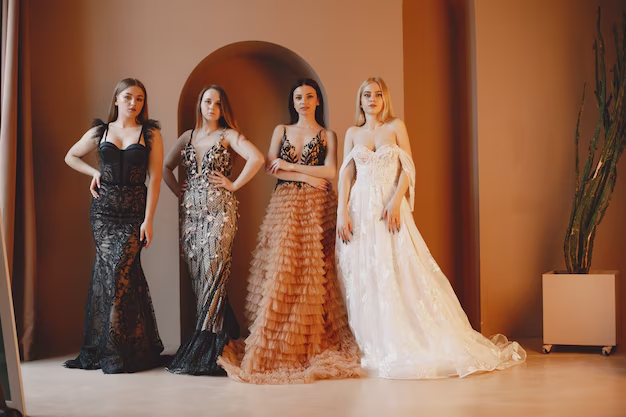
An evening gown is not just a dress. It’s a deliberate decision — about silhouette, fabric, color, occasion, and the story you want to tell when you walk into a room. The best formal looks appear effortless precisely because significant thought went into every element. Understanding what actually makes evening dressing work takes the guesswork out of a category that can easily feel overwhelming.
The Architecture of a Great Gown
Construction is everything in eveningwear. Unlike casual clothing, where imperfect fit can pass unnoticed, a formal gown lives or dies by its internal engineering. Boning in the bodice, well-placed seam allowances for alterations, quality zipper or corset-back construction, and a hem that’s finished to precisely the right length — these details separate a well-made gown from one that merely photographs well.
When evaluating any formal dress, look at the inside as much as the outside. A fully lined gown with quality boning and structured underlay will hold its shape across a long evening far better than a cheaper version of the same design.
Matching the Gown to the Event
Not all evening occasions are created equal. A state dinner, a charity gala, a black-tie wedding, and a formal corporate awards night each have different dress code expectations — and a gown that’s exactly right for one may be underdressed or overdressed for another.
The clearest guide is the event’s stated dress code combined with the host’s aesthetic. Black-tie means floor-length in formal fabric. Black-tie optional gives you more room. Formal means long or very polished midi. When in doubt, err toward more formal — it’s far easier to remove an accessory than to add formality you didn’t bring.
Terani’s Approach to Evening Design
The Evening Collection at Terani Couture takes a signature approach to balancing glamour with wearability. Known for precision beadwork, structured silhouettes, and thoughtful use of color, the collection addresses the needs of women who want formal dressing to feel as good as it looks.
According to the American Fashion Institute, investment in construction quality is the single most significant differentiator between garments that hold their value across multiple wearings and those that deteriorate quickly — an important consideration in eveningwear designed to be kept and reworn.
Why Timeless Design Outlasts Seasonal Trends
Eveningwear trends change every year, but the gowns that remain relevant for years share a few consistent characteristics. Clean lines, balanced proportions, high-quality fabrics, and thoughtful construction tend to age far better than designs built around a single trend cycle.
This doesn’t mean avoiding contemporary details altogether. Rather, it means choosing trend elements that enhance the gown rather than define it. A modern neckline, subtle embellishment, or updated sleeve treatment can keep a dress current while preserving its long-term appeal.
This is particularly important when investing in formalwear. Unlike everyday clothing, evening gowns are often worn repeatedly across different occasions over several years. A well-designed gown can be restyled with different accessories, shoes, and jewelry to suit changing events without feeling repetitive.
The strongest pieces in any evening wardrobe are those that balance current fashion with enduring elegance. They photograph well today, remain appropriate tomorrow, and continue to deliver value long after seasonal trends have moved on.
Building the Complete Evening Look
The gown is the foundation, but the complete look includes hair, jewelry, shoes, and bag. For formal evenings, the most effective approach is restraint: let the gown carry the look, and choose accessories that complement without competing.
Chandelier earrings with a clean-neckline gown. A minimal clutch in a metallic tone that echoes embellishment on the dress. Heels that maintain the gown’s visual length. These choices create coherence — the sense that the whole look was considered together, not assembled from separate decisions.