
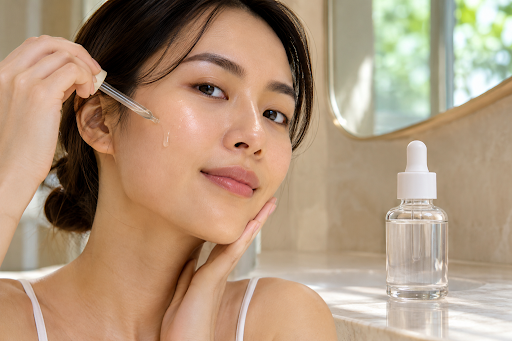
Oily skin, visible pores, and excess shine can be difficult to manage, especially in Singapore’s warm, humid climate. Niacinamide, also known as vitamin B3, may help regulate excess oil, support the skin barrier, and improve the appearance of enlarged pores.
Finding the best niacinamide serum in Singapore starts with understanding your skin concerns, choosing a suitable concentration, and finding a formula that fits comfortably into your daily skincare routine.
Why Does Oily Skin Often Come With Enlarged Pores
Oil production and pore appearance are closely connected, although they are not the only factors involved. Sebum is the natural oil produced by the skin’s sebaceous glands. It helps keep skin lubricated, but excess sebum can collect inside pores and make them appear more noticeable.
Other factors also influence pore visibility, including genetics, age, sun exposure, and the natural structure of your skin. This explains why enlarged pores do not always disappear even when you follow a consistent cleansing routine.
Trying to remove every trace of oil is not the answer. Harsh cleansers and frequent exfoliation can leave skin feeling dry, tight, and uncomfortable. A more balanced approach focuses on managing excess oil while maintaining the skin’s natural moisture barrier.
How Can Niacinamide Help With Oily Skin and Visible Pores
Niacinamide offers several benefits that make it relevant to these concerns. Research suggests that topical niacinamide can help regulate sebum production, which may improve the appearance of oily skin with continued use.
It also supports the skin barrier by helping maintain essential lipids, including ceramides. A healthy barrier helps reduce moisture loss and keeps skin feeling comfortable.
There are other reasons to consider this ingredient:
- Visible pores: By helping manage excess oil, niacinamide may make pores look less noticeable over time.
- Uneven skin tone: It can help improve the appearance of post blemish marks and discoloration.
- Skin texture: Its barrier supporting properties can contribute to smoother, healthier looking skin.
- Redness: Niacinamide can help improve the appearance of visible redness in some people.
However, it is important to keep expectations realistic. Niacinamide cannot permanently close pores or change their natural size. Results also depend on the overall formulation, concentration, and consistency of use.
Does a Higher Concentration Mean Better Results
Not necessarily. A higher concentration is not automatically more effective or suitable for everyone. Your skin concerns, experience with active ingredients, and tolerance should all influence your choice.
For example, Paula’s Choice offers two targeted options for different levels of concern.
The 10% Niacinamide Booster is designed to address enlarged pores, excess oil, uneven skin tone, and post blemish marks. Its lightweight liquid texture makes it an option for people who want to add niacinamide to an existing routine. It can also be applied on its own or mixed with a moisturizer or serum.
The Niacinamide 20% Treatment is intended for more persistent concerns, including the appearance of stretched pores, rough bumps, and uneven texture. Paula’s Choice recommends this treatment for people who are already familiar with niacinamide rather than those trying the ingredient for the first time.
Starting with a lower concentration is a sensible approach if you have not used a concentrated niacinamide product before. A stronger formula is not a shortcut to faster results.
What Should You Look for in a Niacinamide Serum
Choosing a formula involves more than checking the percentage printed on the bottle. Consider how it fits into your daily routine and whether its texture suits your skin.
Look for a few practical qualities:
- A comfortable texture: Lightweight formulas may feel more comfortable if your skin tends to become shiny during the day.
- Barrier supporting ingredients: Ingredients such as glycerin, panthenol, and hyaluronic acid help support hydration.
- A suitable concentration: Choose a formula that matches your experience and skin concerns rather than automatically selecting the highest percentage.
- A fragrance-free formula: This can be a useful consideration if your skin is easily irritated by fragrance.
These details matter because even a well chosen active ingredient needs a suitable formula to work comfortably within your routine.
How to Add Niacinamide to Your Skincare Routine
Niacinamide is generally easy to incorporate into an existing skincare routine. After cleansing, apply your niacinamide serum according to the product instructions, followed by moisturizer.
In the morning, finish with a broad spectrum sunscreen rated SPF 30 or higher. This is particularly important in Singapore, where daily sun protection remains an essential part of skincare.
If you are new to a concentrated treatment, introduce it gradually and observe how your skin responds. Patch testing before regular use is also a sensible precaution, especially if your skin is sensitive or reactive.
Give your routine time to work. Changes in oiliness, pore appearance, and uneven tone are gradual, so assess your skin over several weeks rather than expecting overnight results. If a product causes persistent burning, redness, or discomfort, discontinue use.
Finding the Right Niacinamide Formula for Your Skin
Managing oily skin and visible pores does not require an unnecessarily complicated routine. A suitable cleanser, a well-formulated niacinamide product, a comfortable moisturizer, and daily sunscreen can provide a practical foundation.
The right niacinamide serum depends on your individual concerns and how well your skin tolerates the formula. Understanding the difference between 10% and 20% treatments can help you choose more confidently, without assuming that a higher concentration is always better.